Launch offer — valid today only

📄 Digital book in PDF · read it on your phone or print it

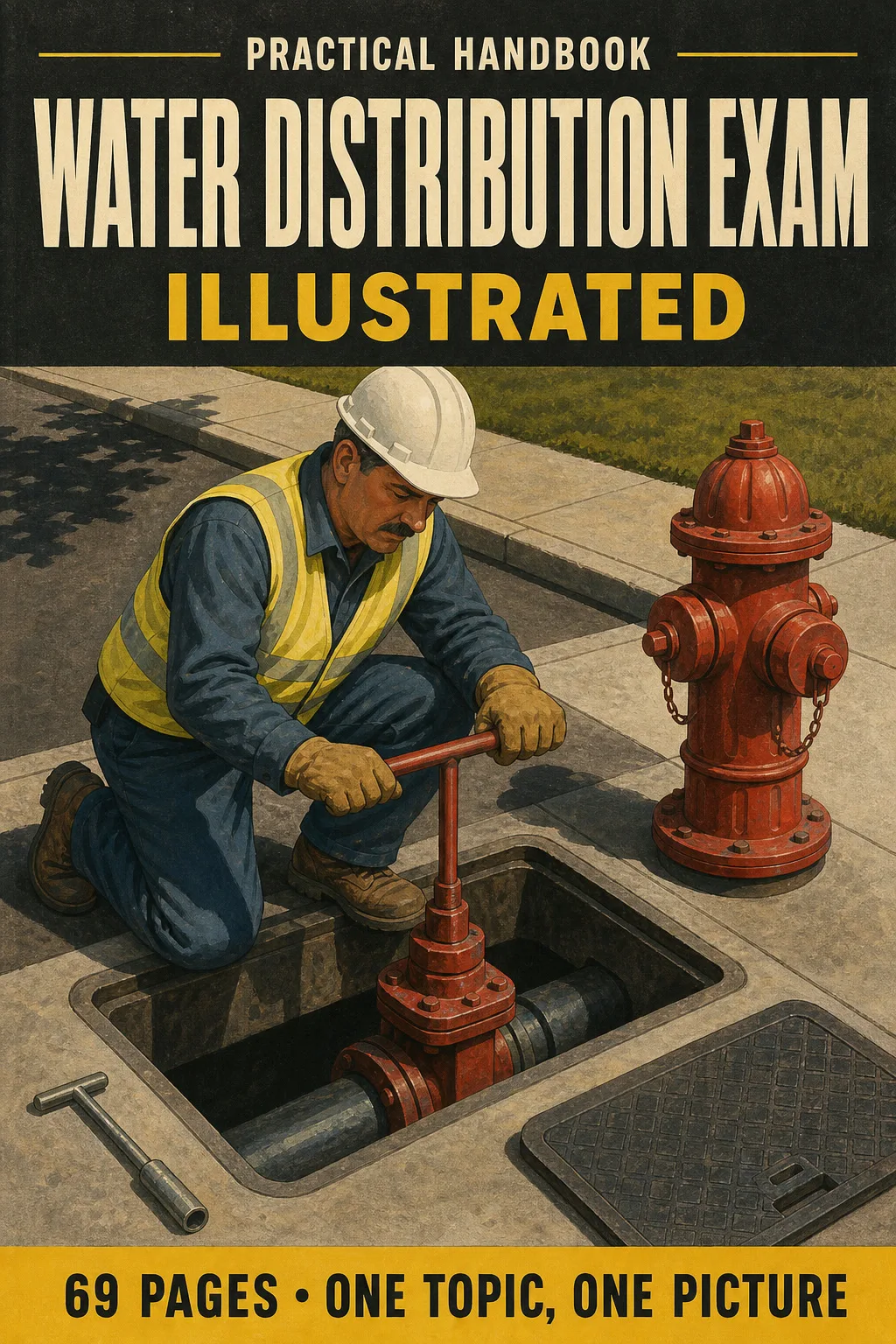
The D1/D2 (Class I-II) Water Distribution Exam in Drawings One Topic on Every Page

Distribution only, no plant treatment or wastewater. Gate valves, dry-barrel hydrants, feet of head and psi, main disinfection, free vs. total chlorine, backflow and the pounds formula: each topic on its own page, the drawing first, then what you need to remember. 69 illustrated pages.

START STUDYING THIS WAY

🔒 Secure checkout · PDF by email · 30-day guarantee

Every topic, its own pageEvery valve, hydrant and formula drawn, with the explanation right beside it
69 illustrated pages9 parts, from source to tap to the exam-day checklist
Up-to-date sourcesChecked against the ABC Need-to-Know Criteria, EPA drinking water rules, AWWA C651 and OSHA
PDF by emailFormat

Look Inside the Book

Every page has a big drawing and a box with the numbers, steps and formulas you need to know:

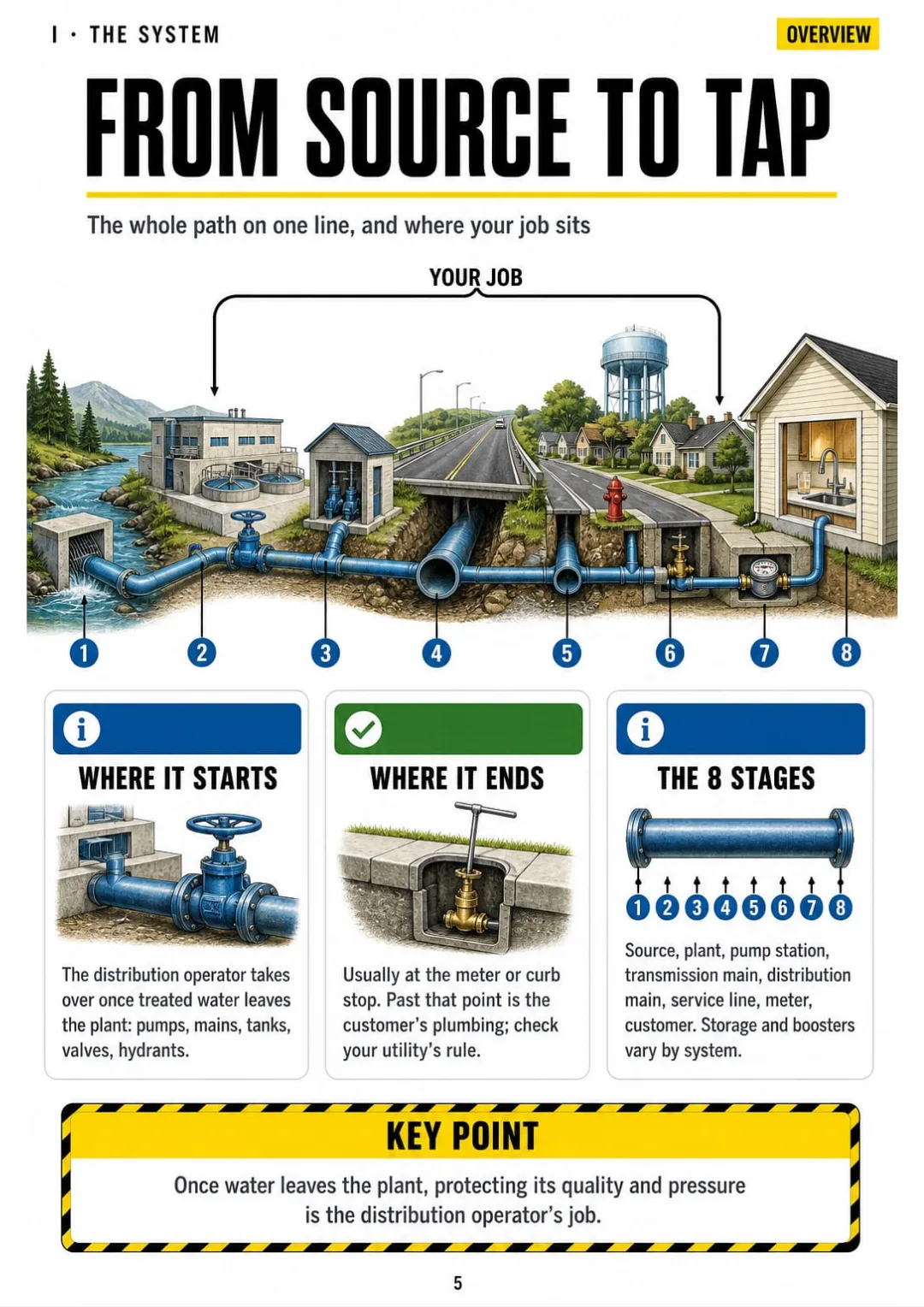
8 stages from source to tap, with the operator's section marked: plant outlet to meter
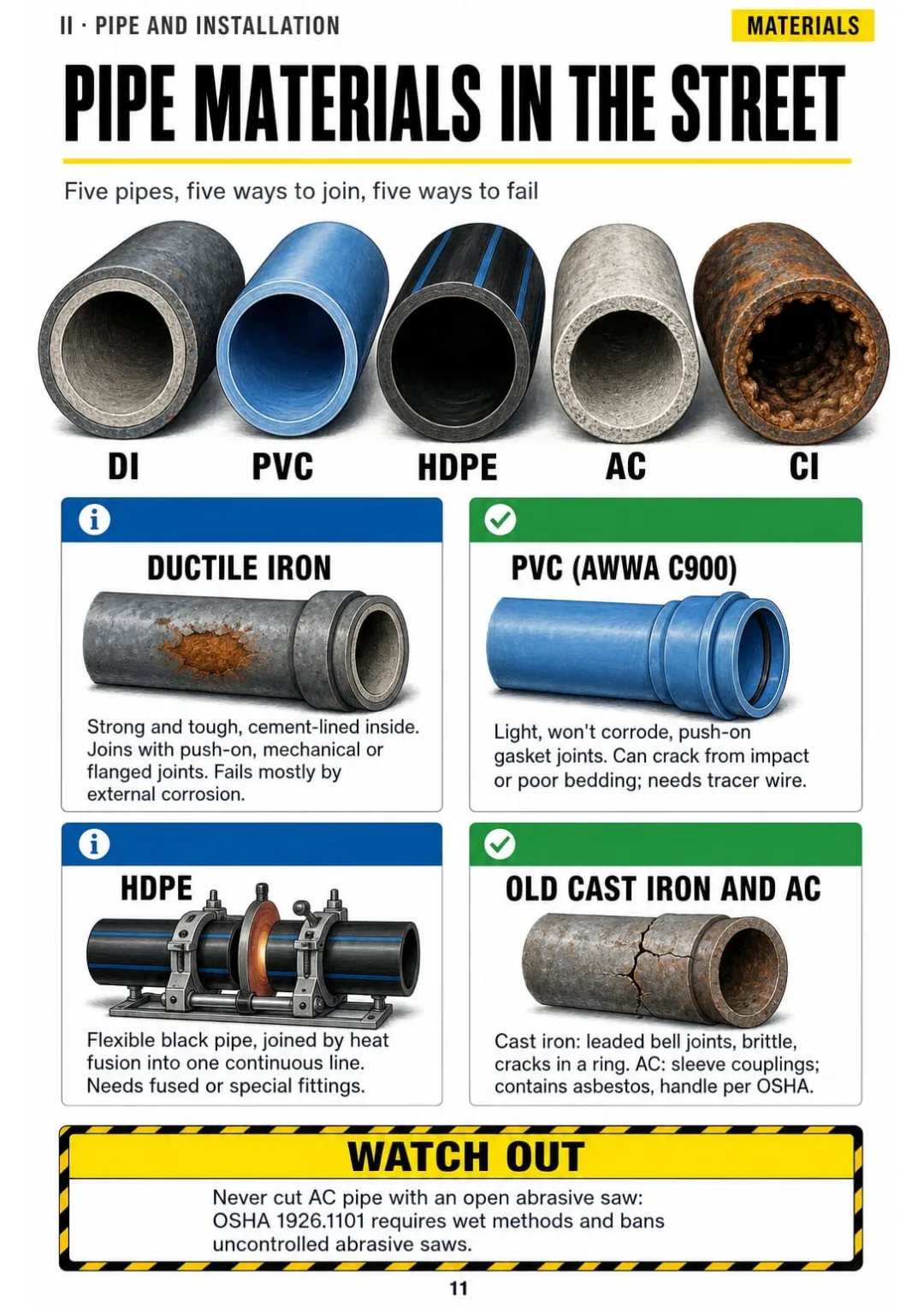
Ductile iron, PVC, HDPE, AC and cast iron: how each joins and how each fails
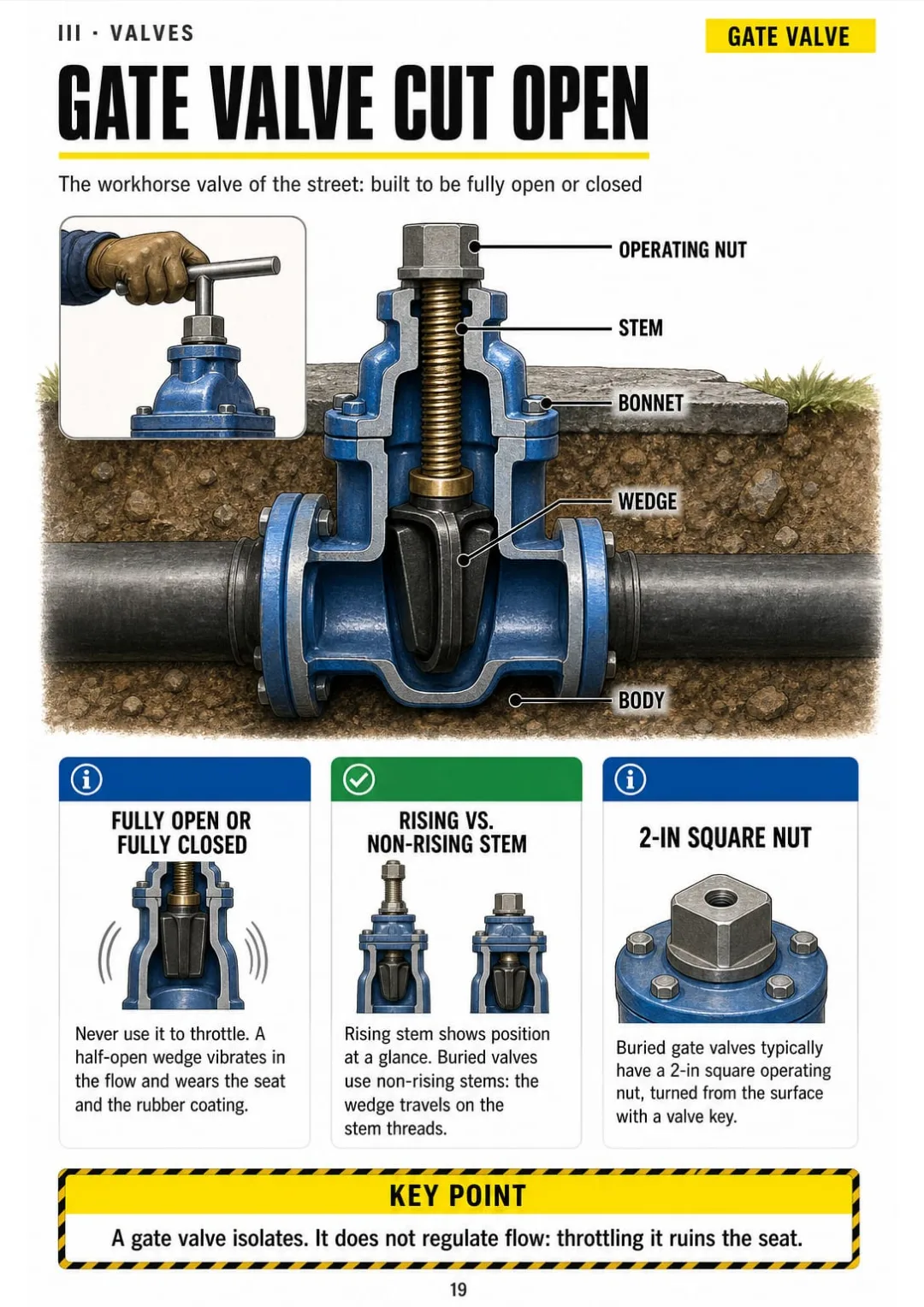
Stem, wedge, bonnet and 2-in operating nut in one drawing: open or closed, never in between.
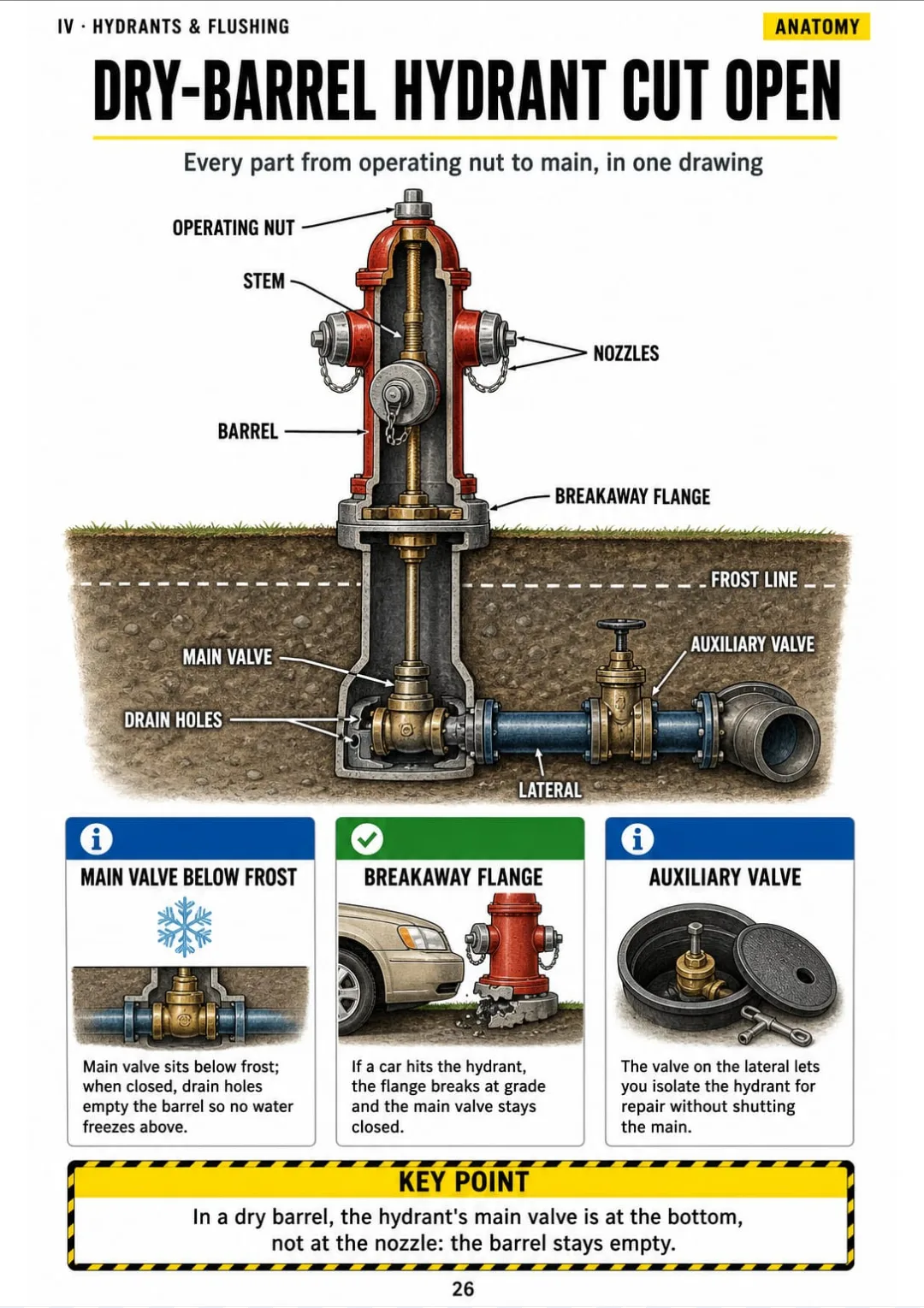
Dry-barrel hydrant: the main valve sits below the frost line and drain holes empty the barrel.
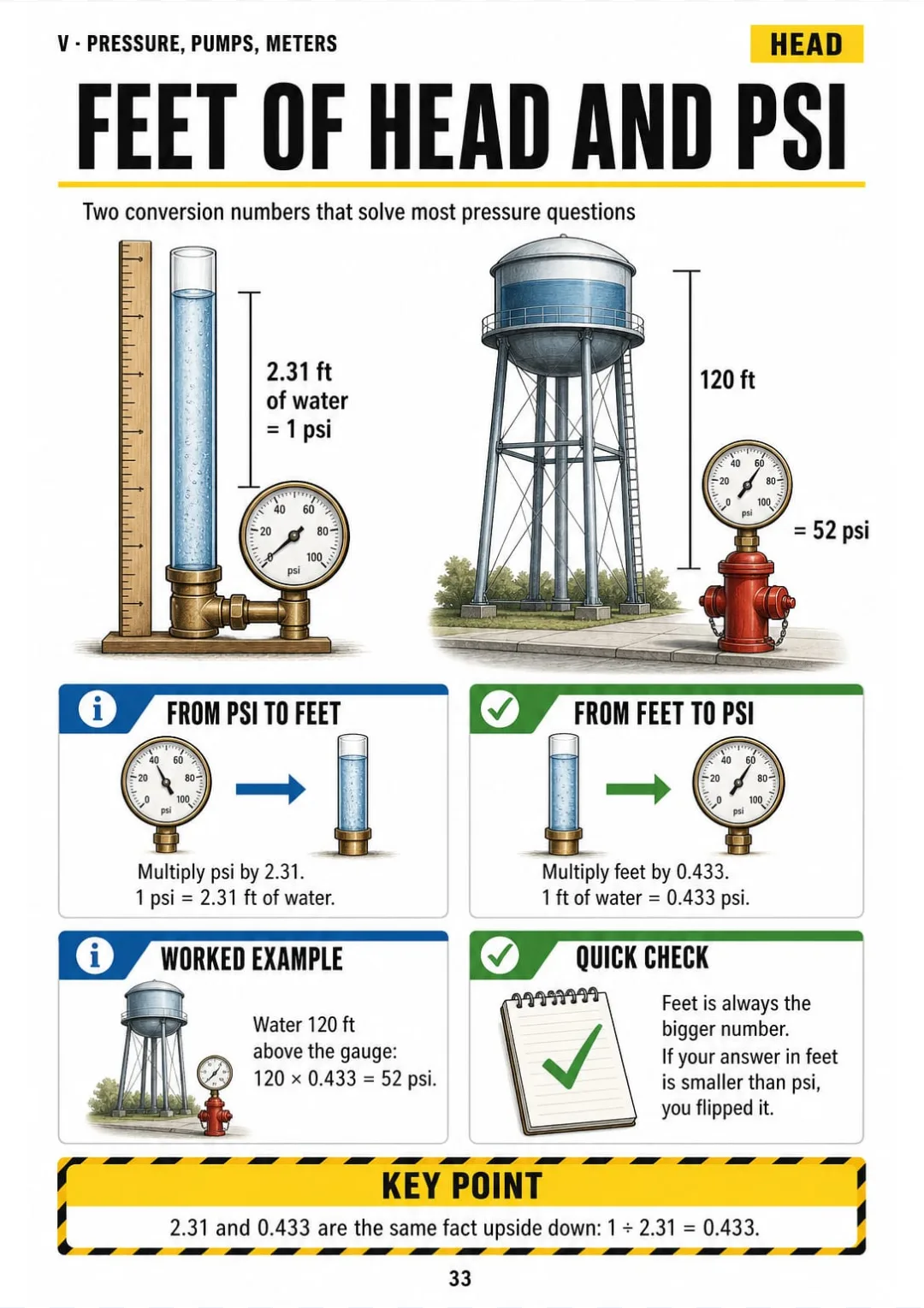
1 psi = 2.31 ft · 1 ft = 0.433 psi · 120 ft of water = 52 psi
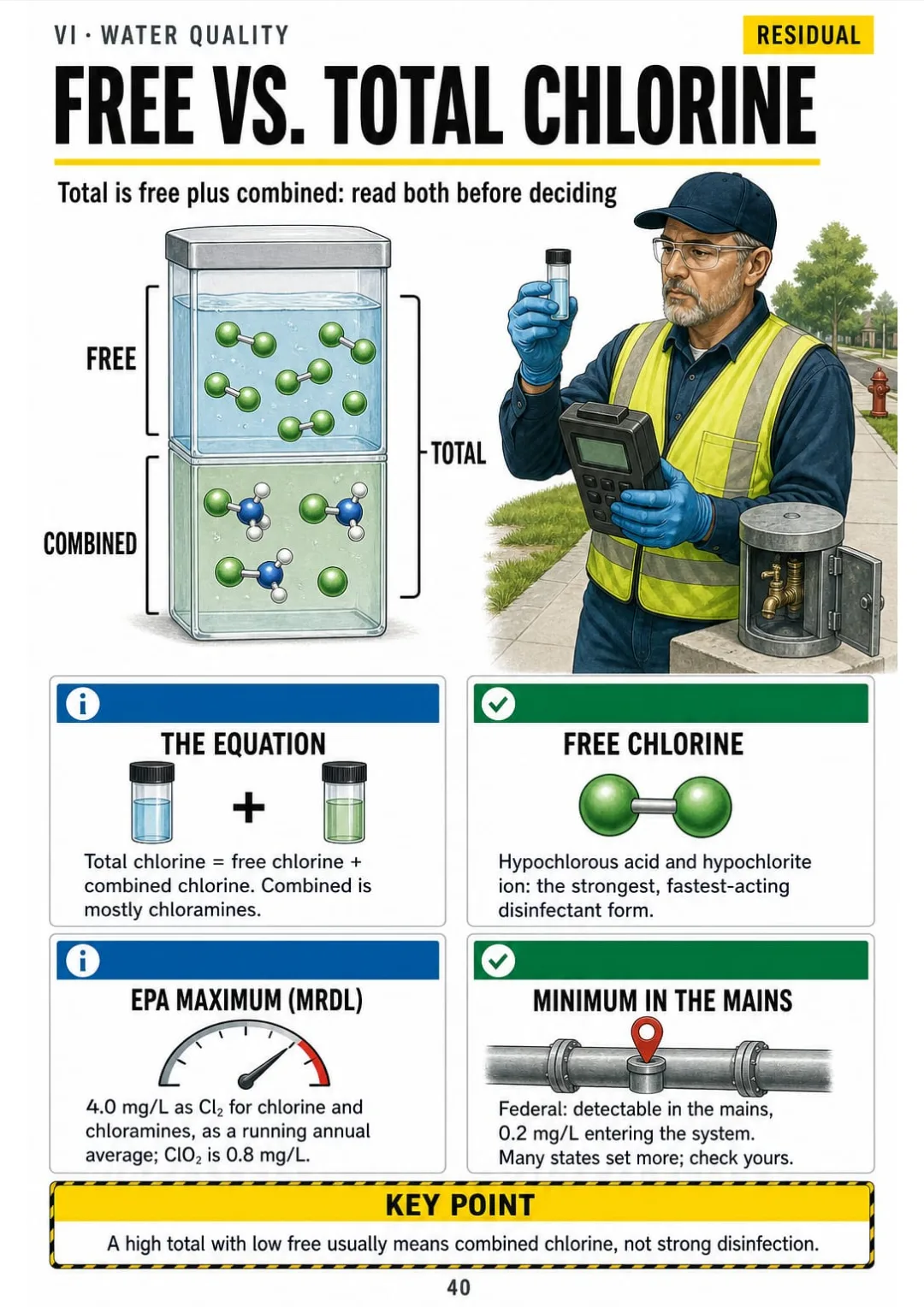
Total = free + combined · MRDL 4.0 mg/L for chlorine and chloramines (40 CFR 141.65)
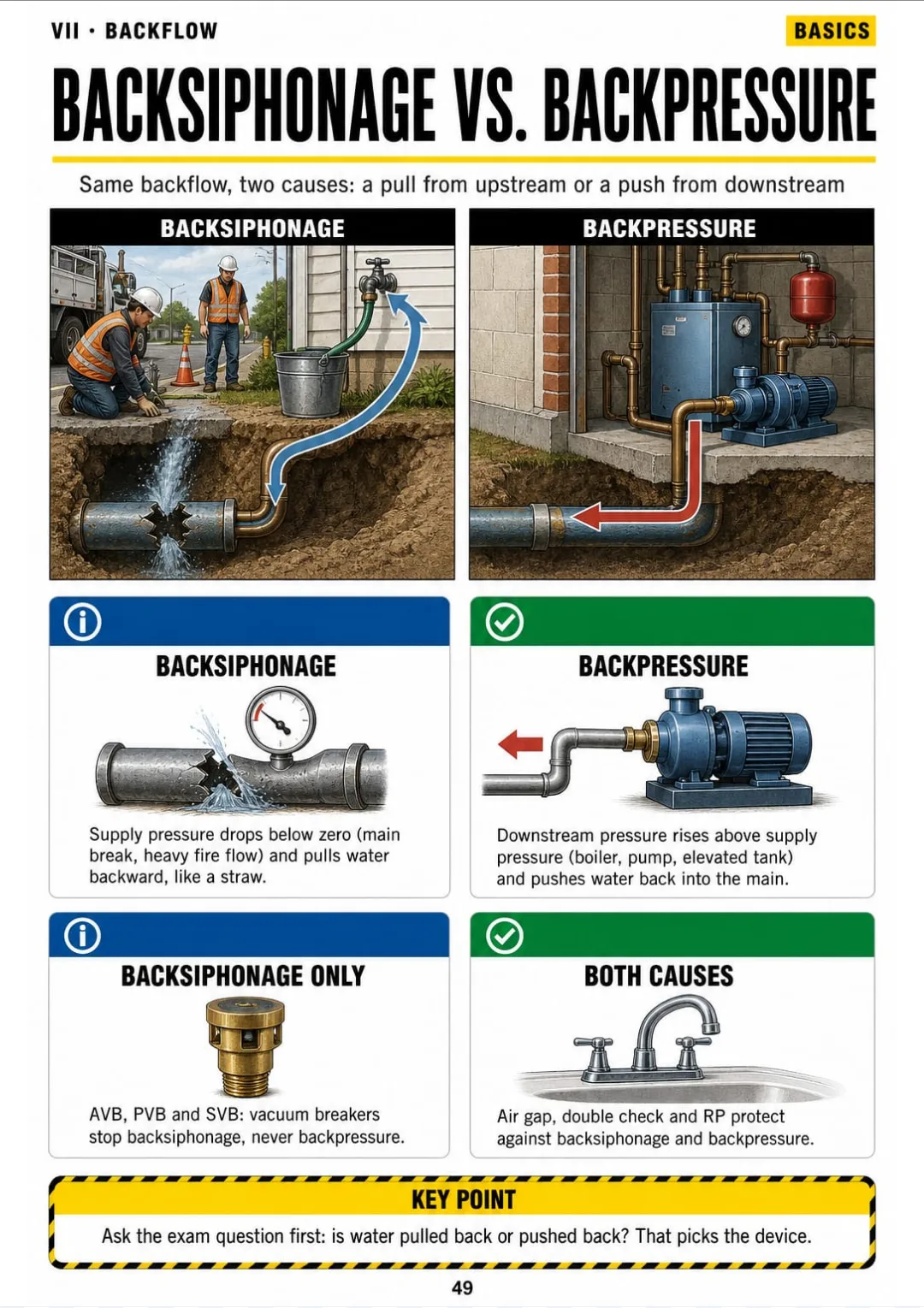
Backsiphonage pulls, backpressure pushes: vacuum breakers stop only the first.
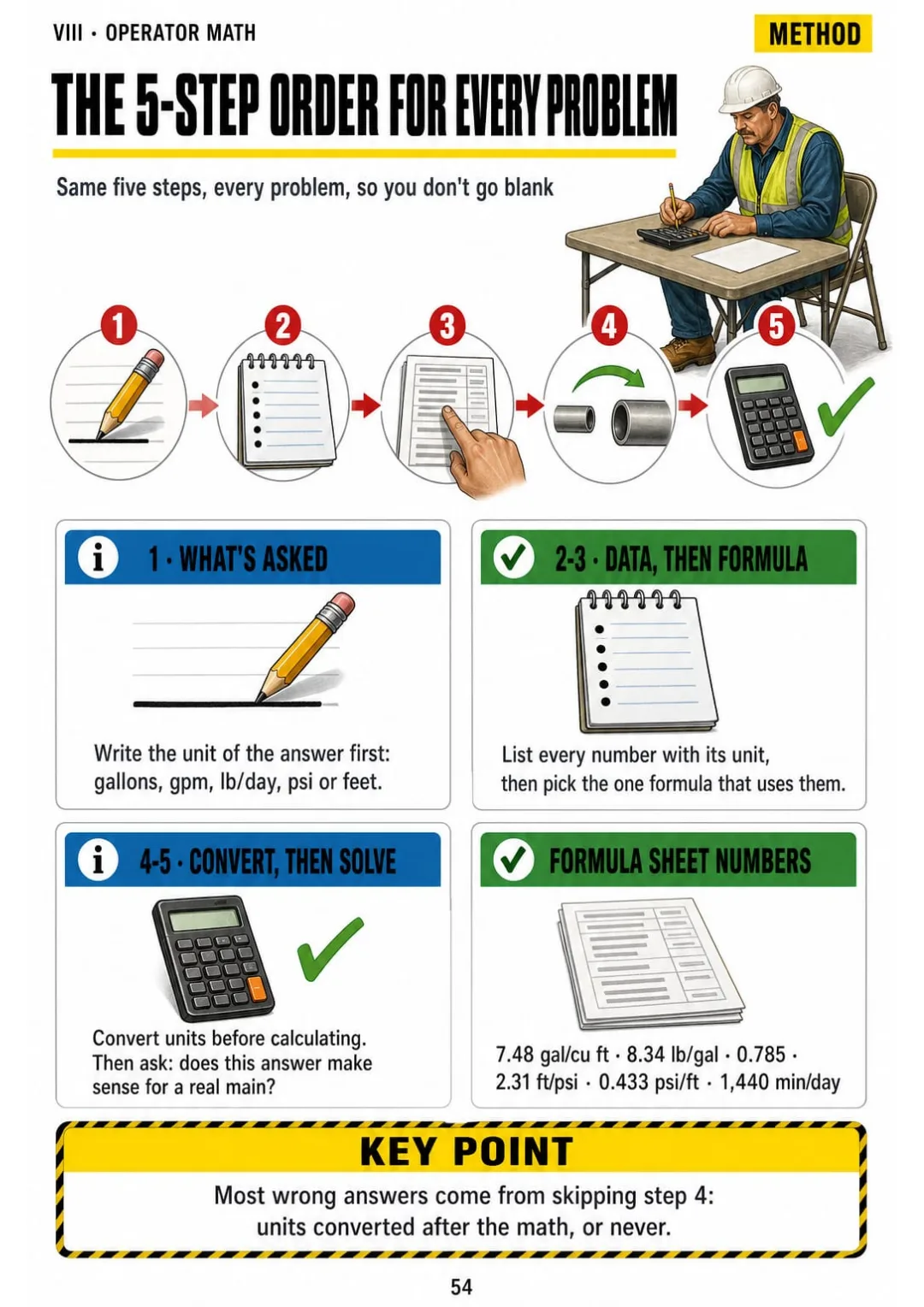
5 steps, always in order: asked, data, formula, convert, solve and check.

Swipe to see more →

These are real pages from the book. The table of contents is the full one: 9 parts and 65 topics.

The Problem Isn't You. It's How It Was Explained to You.

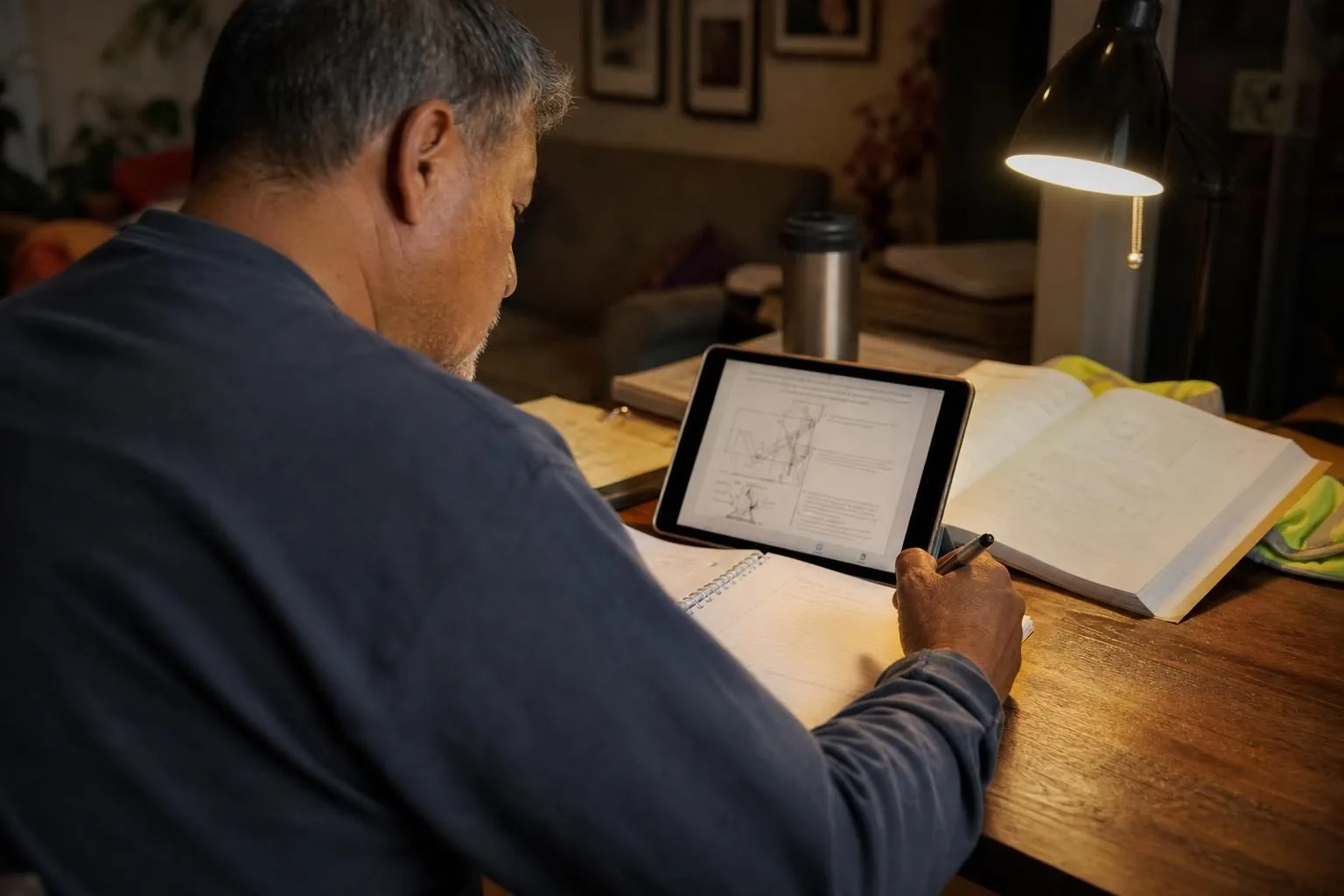
It's late, the shift is over, and the manual is open to gate valves. You've turned hundreds of them in the street, but now you have to explain what's inside one.

The manual covers stems, wedges and bonnets in long paragraphs with no clear picture. Words alone don't show you how the wedge drops into the seat.

Stem, wedge, bonnet and 2-in operating nut in one drawing: open or closed, never in between.

In this book, the gate valve gets one page: cut open, with the stem, wedge, bonnet and 2-in operating nut labeled. And one line you won't forget: open or closed, never in between.

The butterfly valve, the dry-barrel hydrant, feet of head and psi, AWWA C651 disinfection and backsiphonage all work the same way: each topic gets its own page.

You look at the drawing, it makes sense, and you answer the valve question without opening the manual again.

COMPARE FOR YOURSELF

Same Topic, Two Ways to Study It

THIS
  • The manual: line after line after line
  • Pipe materials explained in words only
  • You walk into the exam still unsure
Distribution mains currently in service include ductile iron, polyvinyl chloride (PVC), high-density polyethylene (HDPE), asbestos-cement (AC) and legacy gray cast iron. Ductile iron, generally joined by push-on or mechanical joints, offers high tensile strength but is susceptible to external corrosion in aggressive soils in the absence of polyethylene encasement. PVC, assembled with gasketed bell-and-spigot joints, resists corrosion yet may fail longitudinally under surge conditions or improper bedding. HDPE is joined by butt fusion. Cast iron, being brittle, is prone to circumferential breaks resulting from ground movement and frost loading.
FOR THIS
  • Each pipe material in one drawing
  • How it joins and how it fails, in a box
  • You see it and you get it
Ductile iron, PVC, HDPE, AC and cast iron: how each joins and how each fails
CONTENTS

Take a Look at the 9 Parts and 65 Topics

The system, pipe and installation, valves, hydrants and flushing, pressure and pumps, water quality and disinfection, backflow, operator math and safety: 69 pages, all illustrated

IThe System at a Glance · pp. 5-10
  1. From Source to Tap in One Drawing
  2. Transmission, Distribution and Service Lines
  3. Grid vs. Tree: Why Dead Ends Cause Trouble
  4. Pressure Zones and How Elevation Sets Them
  5. Elevated Tanks, Standpipes and Ground Storage
  6. What the D1/D2 Exam Covers
IIPipe and Installation · pp. 11-18
  1. Pipe Materials You Will See in the Street
  2. Joints: Push-On, Mechanical, Flanged, Fused
  3. Thrust Blocks and Restrained Joints
  4. Bedding, Backfill and Cover Depth
  5. Water and Sewer Separation
  6. Pressure and Leakage Test on a New Main
  7. Taps, Tapping Sleeves and Corporation Stops
  8. Main Breaks: The Repair Sequence
IIIValves · pp. 19-25
  1. Gate Valve Cut Open
  2. Butterfly Valve
  3. Check, Air-Release and Pressure-Reducing Valves
  4. Curb Stops, Meter Valves and Valve Boxes
  5. Counting Turns: How Many to Close a Valve
  6. Exercising Valves in the Right Order
  7. Water Hammer: What It Is and How to Avoid It
IVHydrants and Flushing · pp. 26-32
  1. Dry-Barrel Hydrant Cut Open
  2. Wet-Barrel vs. Dry-Barrel
  3. Opening and Closing a Hydrant Correctly
  4. Hydrant Color Code
  5. Fire Flow Test: Static, Residual, Pitot
  6. Conventional vs. Unidirectional Flushing
  7. Hydrant Maintenance and Records
VPressure, Pumps and Meters · pp. 33-39
  1. Feet of Head and psi: The Two Numbers
  2. Static vs. Dynamic Pressure and Friction Loss
  3. Centrifugal Pump Cut Open
  4. Cavitation and Pump Problems
  5. Pump Curve in One Look
  6. Water Meters: Positive Displacement, Turbine, Compound
  7. Reading a Meter and Spotting a Leak
VIWater Quality and Disinfection · pp. 40-48
  1. Chlorine Residual: Free vs. Total
  2. Breakpoint Chlorination
  3. Chloramines and Nitrification
  4. Disinfecting a New Main (AWWA C651)
  5. Bacteriological Samples After Repair or New Main
  6. Revised Total Coliform Rule
  7. Lead and Copper Rule
  8. Disinfection Byproducts and Water Age
  9. Customer Complaints: Red, Black, Milky, Smelly
VIICross-Connections and Backflow · pp. 49-53
  1. Backsiphonage vs. Backpressure
  2. Air Gap: The Only Perfect Protection
  3. AVB, PVB and SVB
  4. Double Check vs. Reduced Pressure (RP)
  5. Hazard Levels and Annual Testing
VIIIOperator Math, Step by Step · pp. 54-63
  1. The 5-Step Order for Every Math Question
  2. Area of a Circle and the 0.785 Shortcut
  3. Volume of a Pipe in Gallons
  4. Volume of a Tank
  5. Flow: Q = A × V
  6. Detention Time
  7. The Pounds Formula
  8. Hypochlorite: Correcting for Percent Strength
  9. Dosing a New Main to 25 mg/L
  10. Pressure and Head Problems
IXSafety and Exam Review · pp. 64-69
  1. Trench Safety by the Numbers
  2. Confined Spaces: Vaults and Meter Pits
  3. Work Zone Traffic Control
  4. Lockout/Tagout and Chlorine Handling
  5. Most Common Mistakes on the Distribution Exam
  6. Exam-Day Checklist

One Page, One Topic, All Clear

Think of it this way:

A new main is going in on your street, and it has to be disinfected before it goes into service. The supervisor asks how much chlorine it takes to dose it to 25 mg/L.

You open the book to the page on dosing a new main: the pipe drawn, its volume in gallons, then the pounds formula solved step by step.

1 psi = 2.31 ft · 1 ft = 0.433 psi · 120 ft of water = 52 psi

The gate valve, the dry-barrel hydrant, feet of head, free vs. total chlorine and the RP assembly work the same way: each one has its own page.

Water Distribution Exam Illustrated has 9 parts and 65 topics, all drawn, with a step-by-step math section and an exam review at the end.

What you see drawn, you don't have to memorize.

What's Inside Water Distribution Exam Illustrated:

Ipp. 5-10

The System at a Glance

The whole system in one drawing: transmission, distribution and service lines, grid vs. tree, pressure zones, storage tanks and what the D1/D2 exam covers.

IIpp. 11-18

Pipe and Installation

Pipe materials, joints, thrust blocks, bedding and cover, water-sewer separation, pressure and leakage testing, taps and the main-break repair sequence.

IIIpp. 19-25

Valves

Gate, butterfly, check, air-release and pressure-reducing valves, curb stops, counting turns, exercising valves and water hammer.

IVpp. 26-32

Hydrants and Flushing

The dry-barrel hydrant cut open, wet vs. dry barrel, opening and closing correctly, color code, fire flow tests, flushing and records.

Vpp. 33-39

Pressure, Pumps and Meters

Feet of head and psi, static vs. dynamic pressure, friction loss, centrifugal pumps, cavitation, pump curves and water meters.

VIpp. 40-48

Water Quality and Disinfection

Free vs. total chlorine, breakpoint, chloramines, AWWA C651, bacteriological samples, the RTCR, Lead and Copper, DBPs and customer complaints.

VIIpp. 49-53

Cross-Connections and Backflow

Backsiphonage vs. backpressure, the air gap, AVB, PVB and SVB, double check vs. RP, and hazard levels with annual testing.

VIIIpp. 54-63

Operator Math, Step by Step

A 5-step order for every problem, so you stop guessing which formula comes first: the 0.785 shortcut, pipe and tank volume, Q = A × V, detention time, the pounds formula and hypochlorite.

IXpp. 64-69

Safety and Exam Review

Trench safety, confined spaces, work zone traffic control, lockout/tagout, chlorine handling, common exam mistakes and an exam-day checklist.

At the end of the book: 10 operator math topics with worked examples, the most common exam mistakes and an exam-day checklist.
Plus: 2 Free Books

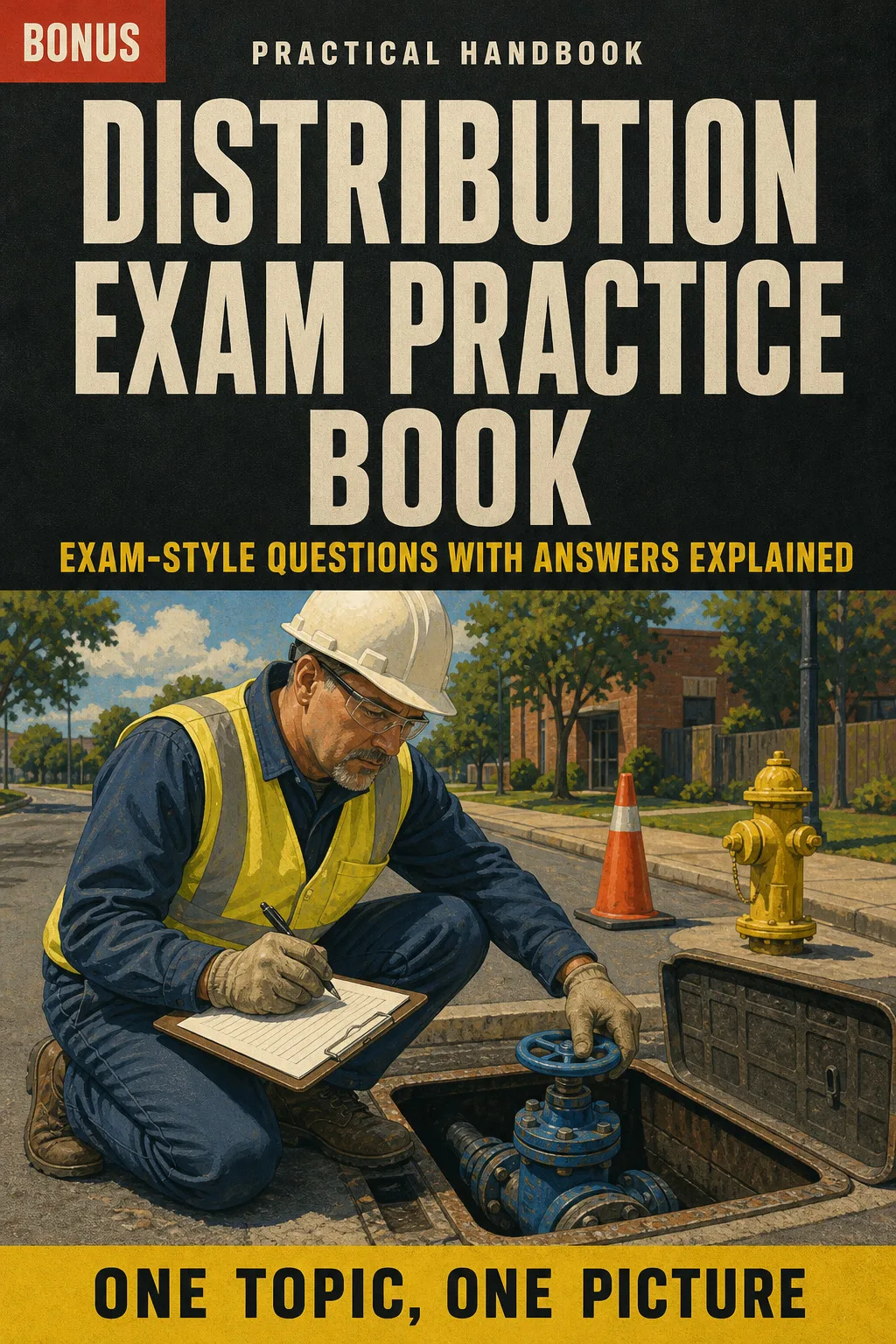
Distribution Exam Practice Book: Exam-Style Questions with Answers Explained

BONUS 1: «Distribution Exam Practice Book: Exam-Style Questions with Answers Explained»

Value on its own: US$ 17.90

Practice with multiple-choice questions like the real exam, including the math, and see why each answer is right or wrong.

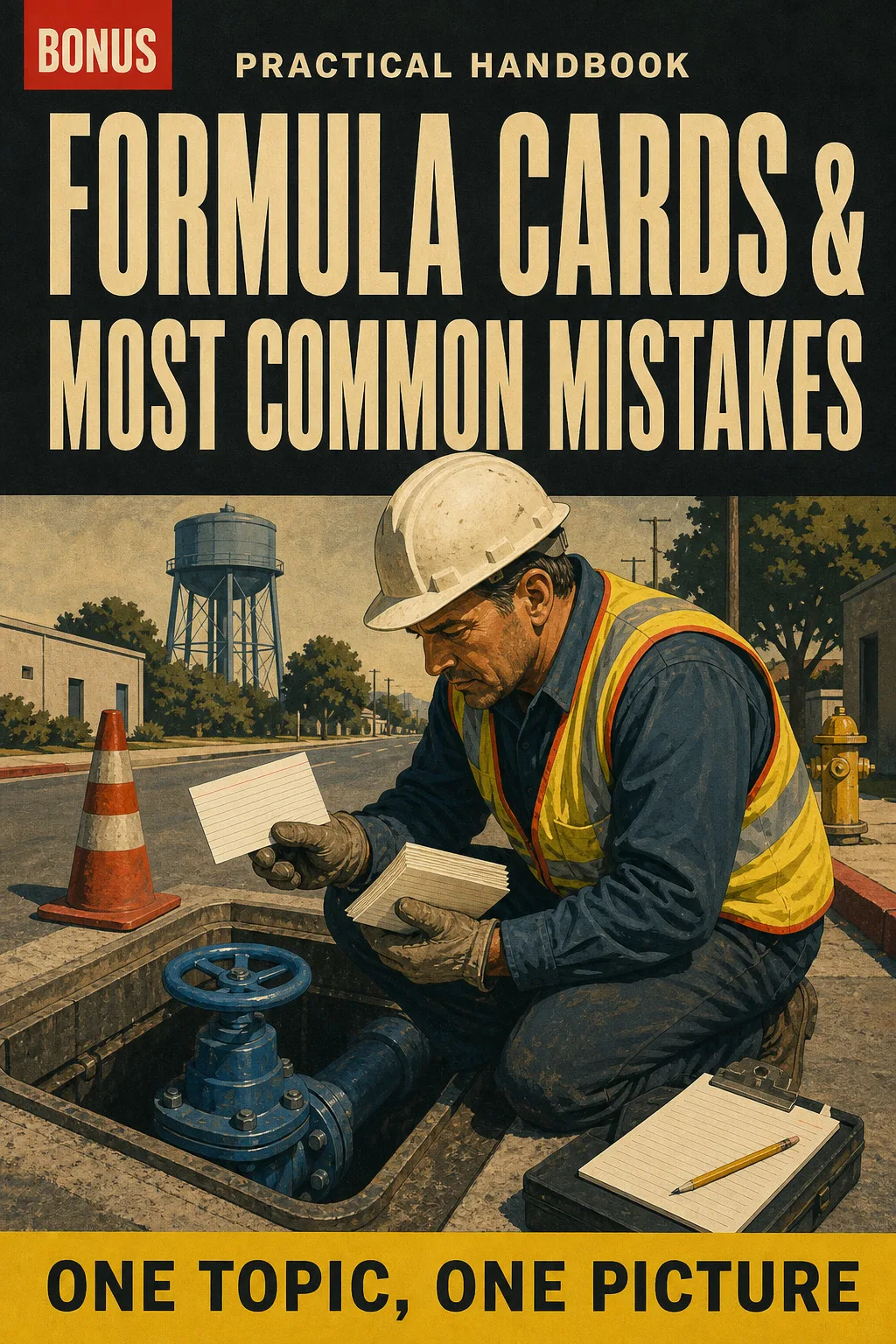
Formula Cards & Most Common Mistakes

BONUS 2: «Formula Cards & Most Common Mistakes»

Value on its own: US$ 14.90

Review every formula and conversion on one card each, plus the mistakes people make most often on the math and the valve questions.

Water Distribution Exam Illustrated with 2 Free Books

  • Water Distribution Exam Illustrated: 69 illustrated pagesUS$ 63
  • BONUS 1: Distribution Exam Practice Book: Exam-Style Questions with Answers ExplainedUS$ 17.90
  • BONUS 2: Formula Cards & Most Common MistakesUS$ 14.90
  • High-resolution PDF to printIncluded
Total value US$ 95.80
YOUR PRICE:
US$ 27
You save US$ 68.80
YES, I WANT WATER DISTRIBUTION EXAM ILLUSTRATED FOR US$ 27

📄 This is a digital PDF book sent to your email: nothing is printed or shipped.

Secure purchaseEncrypted payment30-day guarantee

PDF by email: We email you Water Distribution Exam Illustrated as a PDF, together with the two free books. It's a single payment: no installments, no extra charges.

Who This Book Is For

You're starting to study for the D1

You're starting to study for the D1

You get the whole distribution system one page at a time, starting with what you already see in the street and moving on to what the exam asks about it.

Your exam date is coming up

Your exam date is coming up

Each formula comes with a worked example, always solved in the same 5 steps. You can review a topic in one look at the page.

You already work on a distribution crew

You already work on a distribution crew

You find out why things happen the way they do: why the line bangs when you close a valve too fast, why a dry barrel has to drain, why a vacuum breaker isn't enough. Print the pages you want to keep on hand.

Everything You Get Today

US$ 95.80US$ 27
YES, I WANT WATER DISTRIBUTION EXAM ILLUSTRATED FOR US$ 27

📄 This is a digital PDF book sent to your email: nothing is printed or shipped.

30DAYS
GUARANTEE

30-Day Guarantee

Try Water Distribution Exam Illustrated for 30 days, bonus books included.

We refund everything if the file won't open, if the book isn't what you see here, if you were charged twice or if the email doesn't arrive. Just email us.

You pay once. No subscriptions.

Frequently Asked Questions

Is this for me if I've worked on a crew for years but haven't studied in decades?

Yes. It starts from what you already do in the street and works through the math one step at a time, from the beginning. It covers distribution only, with nothing from plant treatment or wastewater.

Where does the content come from?

From the ABC Need-to-Know Criteria for Water Distribution Class I-II, the EPA Safe Drinking Water Act rules (RTCR, Lead and Copper, Stage 2 DBP), AWWA C651, C600, M17 and M14, OSHA 29 CFR 1926 Subpart P and 1910.146, NFPA 291 and the Ten States Standards.

Is this official material?

No. It's an independent illustrated study book that follows the ABC Class I-II distribution criteria. Your state may call this level D1/D2, Grade 1/2 or Class I/II, and each state runs its own exam and sets its own passing score, so check with your state's certification program.

Does it replace my course or my training?

No. Keep your official manual and your utility's training. This book doesn't add more text: it takes the topics the manual covers in long paragraphs and gives each one its own page, with a drawing and a box with the numbers and formulas. Use it to review, not to replace supervised field work.

Are the practice questions the ones on the exam?

No. They're written for this book in the exam's style, with every answer explained. They aren't official questions from any exam.

How do I get it?

The book and the 2 bonus books come as a PDF by email.

Do I have to pay every month?

No. It's a one-time payment.

Can I have it on paper?

Yes. The PDF prints fine at home or at a print shop, and you can print just the pages you want.

How does the refund work?

You have 30 days. We refund everything if the file won't open, if the book isn't what you see on this page, if you were charged twice or if the email doesn't arrive: just email us.

Before You Close This Page

No more rereading the manual with nothing sticking.

The gate valve, the hydrant and the pounds formula, drawn and done.

You walk into the exam knowing where everything is.

Drawings make studying faster.

The book is right below.

One-time payment: US$ 27 · Guarantee: 30 days · PDF by email

YES, I WANT WATER DISTRIBUTION EXAM ILLUSTRATED FOR US$ 27

📄 This is a digital PDF book sent to your email: nothing is printed or shipped.